

 Español
 русский
Global plastic manufacturing is undergoing rapid transformation as industries such as packaging, automotive, consumer goods, and household products demand higher color consistency and production stability. Manufacturers are no longer only focused on cost efficiency—they are prioritizing visual uniformity, processing stability, and compatibility with high-speed injection systems. In this context, Injection Color Masterbatch has become a key material solution widely discussed by procurement teams and production engineers seeking stable pigmentation performance in injection molding applications.
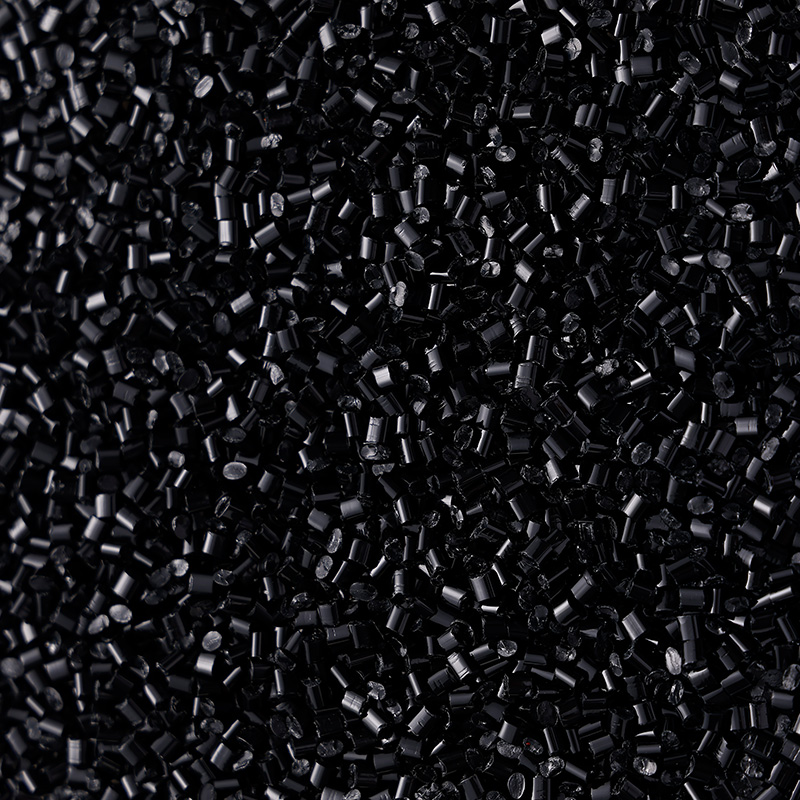
Recent industry search behavior shows increased attention to dispersion quality, thermal stability, and batch-to-batch color consistency in large-scale production environments.
Why Is Color Consistency Becoming a Critical Quality Standard?
In modern manufacturing, product appearance plays a major role in brand perception. Even slight color variation can affect product acceptance, especially in consumer-facing industries.
Buyers are increasingly focused on:
- Stable color output across production batches
- Reduced color variation in high-volume injection runs
- Accurate shade matching for brand identity requirements
- Improved repeatability in automated molding systems
Consistent coloration is now considered a core quality benchmark rather than an optional feature.
How Is Injection Molding Technology Influencing Masterbatch Requirements?
As injection molding machines become faster and more automated, material performance requirements are becoming more demanding. Masterbatch must perform consistently under high temperature and pressure conditions.
Key technical expectations include:
- Stable pigment dispersion during rapid injection cycles
- Resistance to thermal degradation under high heat
- Compatibility with various polymer resins (PP, PE, ABS)
- Smooth flow behavior without clogging or streaking
These factors directly affect production efficiency and final product quality.
Why Is Dispersion Quality So Important for Production Stability?
Poor pigment dispersion can advance to visible defects such as streaks, uneven coloring, or weak color intensity. This increases rejection rates and production waste.
Procurement teams are prioritizing:
- Fine and uniform pigment particle distribution
- Strong carrier resin compatibility
- Reduced risk of color spotting or fading
- Stable output under continuous operation
High-quality dispersion improves both efficiency and visual consistency in finished products.
How Are Sustainability Trends Affecting Masterbatch Development?
Sustainability has become a major focus in global plastics manufacturing. Many brands are now seeking environmentally responsible material solutions that still meet performance requirements.
Industry trends include:
- Reduced pigment waste during production
- Improved material efficiency in dosing systems
- Compatibility with recycled plastic resins
- Lower energy consumption during processing
These requirements are influencing how masterbatch formulations are developed and optimized.
Why Is Processing Efficiency a Key Purchasing Factor?
Manufacturers are under pressure to increase output while controlling operational costs. Material efficiency plays a direct role in production speed and equipment stability.
Buyers are looking for:
- Easy dosing and mixing performance
- Stable melt flow during injection molding
- Reduced machine downtime due to material issues
- Consistent processing across different production lines
Efficient materials help factories maintain continuous and stable production cycles.
Manufacturer Insight: What Are Global Buyers Expecting?
As a manufacturer in color additive solutions, we observe a shift toward performance-driven sourcing decisions. Buyers are focusing on long-term stability, technical support, and production consistency rather than only pricing.
Common OEM requirements include:
- Custom color matching for specific applications
- Stable batch-to-batch pigment consistency
- Resin-specific formulation compatibility
- Reliable large-scale supply capability
This reflects the increasing professionalization of global plastic manufacturing supply chains.
Is Color Precision Becoming a Core Manufacturing Standard?
As global industries demand higher visual quality and production efficiency, color consistency has become a critical factor in plastic product manufacturing. Masterbatch is now a key component in ensuring stable and repeatable results across injection molding applications.
In this environment, working with an experienced Color Masterbatch Factory helps manufacturers achieve reliable color performance, improved production stability, and consistent product quality across diverse industrial applications.